Imagine lying in bed, trying to catch some shut-eye, only to be interrupted by loud snoring or waking up gasping for air. If this sounds familiar, you (or your spouse) might be dealing with sleep apnea. But did you know that your dentist can play a crucial role in treating it? Let’s discuss sleep apnea and how dentists can help you find relief.
Understanding Sleep Apnea
Sleep apnea is a serious sleep disorder that occurs when a person’s breathing is repeatedly interrupted during sleep. These interruptions, known as apneas, can last from a few seconds to a minute or longer and can occur multiple times an hour. The most common type is obstructive sleep apnea (OSA), which happens when the throat muscles intermittently relax and block the airway during sleep.
Symptoms of Sleep Apnea
Sleep apnea can manifest in several ways, including:
- Loud snoring
- Episodes of stopped breathing during sleep
- Gasping or choking sounds
- Waking up with a dry mouth or sore throat
- Morning headaches
- Difficulty staying asleep (insomnia)
- Excessive daytime sleepiness (hypersomnia)
- Attention problems
Why Sleep Apnea Should Not Be Ignored
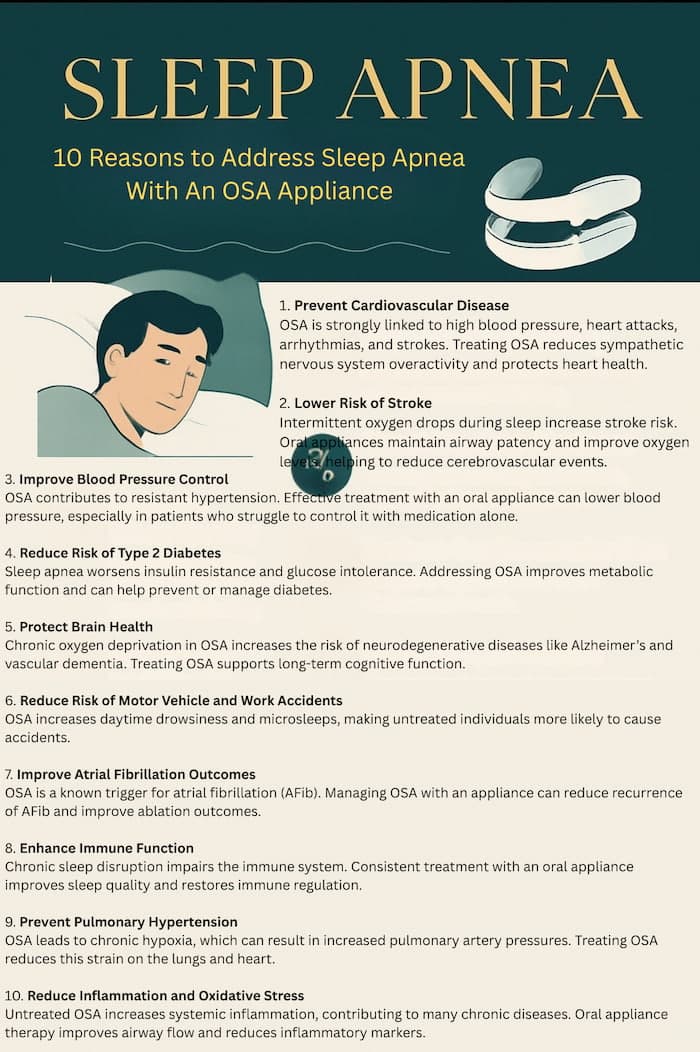
Ignoring sleep apnea can lead to several health issues, such as high blood pressure, heart disease, stroke, diabetes, and depression. It’s crucial to address sleep apnea not only to improve sleep quality but also to enhance overall health.
How Can a Dentist Help with Sleep Apnea?
You might be wondering, “How can my dentist help with a sleep disorder?” Here’s where oral appliance therapy comes into play.
Oral Appliance Therapy: A Dentist’s Role
Oral appliance therapy is a popular and effective treatment for obstructive sleep apnea. These custom-fit devices are worn during sleep to keep the airway open by supporting the jaw in a forward position. Think of them as a retainer or mouthguard, but with a specific function to prevent the airway from collapsing.
How Does It Work?
The oral appliance works by:
- Repositioning the lower jaw, tongue, and soft palate
- Stabilizing the tongue and jaw
- Increasing the muscle tone of the tongue
Advantages of Oral Appliance Therapy
Oral appliances are:
- Comfortable and easy to wear
- Quiet
- Portable and convenient for travel
- Easy to care for
Research Supporting Oral Appliance Therapy
Recent studies support the efficacy of oral appliances in treating sleep apnea. A study published in the “Journal of Clinical Sleep Medicine” in 2021 found that oral appliance therapy effectively reduced apnea-hypopnea index (AHI) scores in patients with mild to moderate OSA, improving overall sleep quality and daytime functioning.
Another research study in 2022 highlighted that patients using oral appliances reported significant improvements in their quality of life, citing better sleep and reduced snoring.
Getting Started with Sleep Apnea Treatment by a Dentist
If you’re considering oral appliance therapy, here’s what you can expect:
Step 1: Consultation and Evaluation
Your dentist will conduct a thorough evaluation to determine if oral appliance therapy is suitable for you. This includes reviewing your medical history, sleep study results, and conducting a dental examination.
Step 2: Customization
If you are a candidate, the next step is to take impressions of your teeth and create a custom-fit oral appliance tailored to your mouth’s unique structure.
Step 3: Fitting and Adjustments
Once your appliance is ready, your dentist will fit it to ensure comfort and effectiveness. Adjustments may be needed to optimize its function.
Step 4: Follow-Up and Monitoring
Regular follow-ups will be scheduled to monitor your progress, make any necessary adjustments, and ensure the appliance continues to work effectively.
Other Sleep Apnea Solutions
In addition to oral appliance therapy, there are other treatment options available for sleep apnea, including:
Continuous Positive Airway Pressure (CPAP)
CPAP therapy involves wearing a mask connected to a machine that delivers a continuous stream of air to keep the airway open during sleep. While effective, some patients find it uncomfortable and challenging to use consistently.
Lifestyle Changes
Certain lifestyle changes can also improve sleep apnea symptoms, such as:
- Losing weight if overweight
- Avoiding alcohol and smoking
- Sleeping on your side
- Keeping nasal passages open at night